
Rabies: A Completely Preventable Disease
What Is Rabies?
Rabies is a viral zoonotic disease that attacks the central nervous system of mammals, including humans. Transmitted primarily through the saliva of an infected animal via a bite or scratch, the virus travels along peripheral nerves to the brain.
A Deadly Race Against Time
After a bite, symptoms may take anywhere from weeks to a few months to appear, beginning with fever, headache, and tingling at the wound site. Once clinical symptoms develop, rabies is virtually 100% fatal, leading to paralysis, coma, and death.
100% Preventable
We have had the science to prevent rabies for over a century. Immediate wound washing followed by a 4-dose course of human Post-Exposure Prophylaxis (PEP) within 24 hours stops the virus—and vaccinating dogs stops transmission before a bite ever happens.
Why Rabies Remains a Crisis in Tanzania
Across sub-Saharan Africa—and particularly in rural regions of Tanzania—rabies is a disease of inequity. While wealthy nations eliminated canine rabies decades ago, families in rural East Africa face life-or-death barriers when a bite occurs:
- Prohibitive Cost of Treatment: A full 4-dose course of human Post-Exposure Prophylaxis (PEP) costs roughly $100 USD—the equivalent of 1 to 2 months' wages for a rural Tanzanian family.
- Limited Clinic Access & Supply Shortages: Families often travel long distances to reach a clinic within the critical 24-hour window, only to find human rabies vaccines out of stock.
- High Risk to Children: Children are the most frequent victims because they interact closely with neighborhood dogs and often do not report minor bites until it is too late.
- Threat to Livelihoods & Wildlife: Rabies kills essential livestock and historically devastated Serengeti wildlife, including endangered African wild dogs and lions.
How We Solve It: Stopping Rabies at the Source
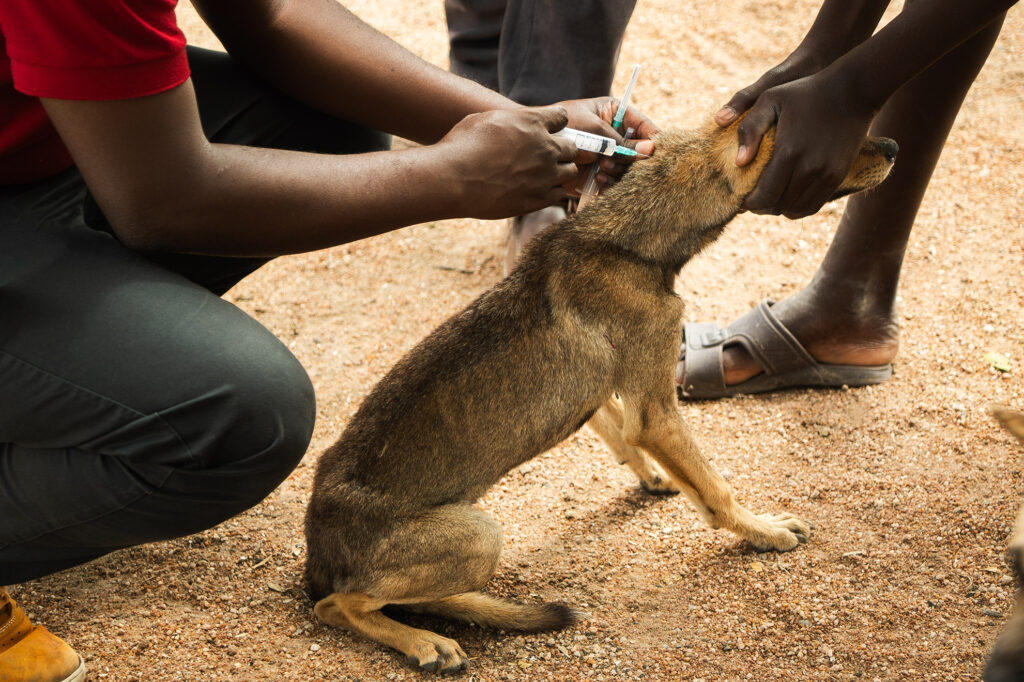
Treating human bite victims alone is expensive and never stops the virus from circulating. Research proves that vaccinating at least 70% of a community's dog population breaks the transmission cycle and achieves herd immunity. Our partnership with Rabies Free Africa (a program of Washington State University) deploys a scalable, sustainable model:
1. Dual-Delivery Mass Dog Vaccination
Mobile teams run high-volume central clinics capable of vaccinating up to 1,000 dogs per day in denser areas, while trained local village vaccinators provide year-round, continuous vaccination access in remote rural communities.
2. Breaking the Cold Chain
Innovative vaccine thermostability research and low-cost, locally made passive cooling devices allow rabies vaccines to be safely stored at the village level without reliable electricity.
3. Smartphone Tracking & Surveillance
Field teams use smartphone-based canine facial recognition and Integrated Bite Case Management (IBCM) to track vaccinated dogs, prevent duplicate dosing, and rapidly trace rabid animal exposures.
4. Community & School Education
Local health champions teach schoolchildren and parents how to prevent dog bites, immediately wash wounds with soap and water, and seek urgent post-bite care.
Proven Success in Tanzania's Mara Region
In northern Tanzania's Mara Region—bordering the Serengeti ecosystem—Rabies Free Africa and its Tanzanian partners (including Global Health Tanzania and the Ifakara Health Institute) have demonstrated that canine rabies elimination is achievable even in resource-limited rural settings.
Before sustained mass vaccination, the Mara Region suffered thousands of animal bite exposures and dozens of preventable human rabies deaths every year. Through consistent community-led vaccination campaigns, dog-to-dog rabies transmission has been driven down to negligible levels in target zones, human deaths have dropped dramatically, and rabies cases in Serengeti wildlife have been halted.
Help Us Scale Elimination Across Tanzania
Your contribution to our Rotary Global Grant directly funds vaccines, local cold-chain storage, and trained Tanzanian vaccinators—protecting children, families, and communities for generations.
Donate to End Rabies Now